Roast Levels Decoded: Why "Dark" Doesn't Always Mean "Strong Coffee"

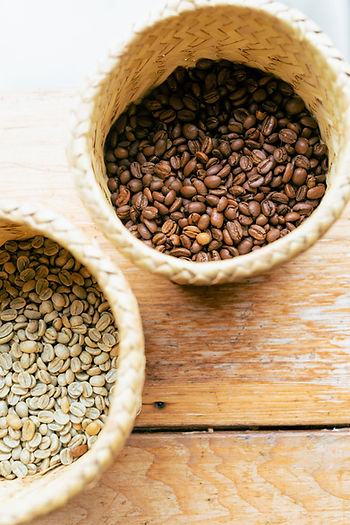
If you’ve ever reached for a bag of "Italian Roast" or "French Roast" because you needed a massive caffeine kick to start your day, you aren’t alone. It is perhaps the most persistent myth in the industry: the idea that the darker the bean, the stronger the coffee.
At Sur Coffee, we believe that understanding coffee roast levels is the key to unlocking your personal palate. When we talk about "Dark," we are describing a flavor profile and a chemical transformation - not necessarily the intensity of the caffeine or the strength of the brew.
To get the most out of your morning ritual, we need to separate the color of the bean from the power of the cup.
The Quick Take: Does Dark Roast Mean Stronger Coffee?
In specialty coffee, "strong coffee" refers to the concentration of dissolved solids (TDS) in the liquid, while "dark roast" refers to the duration and temperature of the roasting process. Darker roasts have a more intense, smoky flavor profile due to the Maillard reaction, but they actually contain slightly less caffeine by volume than light roasts. The true strength of your coffee is determined by your brewing ratio - the amount of coffee grounds used per ounce of water - rather than the roast level itself.
Roast Profile vs. Brewing Strength
To understand why a dark roast isn't inherently "stronger," we have to define our terms. In a professional cupping lab, "strength" and "roast" are two completely different metrics.
1. Roast Level (The Flavor Profile)
Roast level describes how long the green coffee bean was subjected to heat. As a bean roasts, it undergoes the Maillard reaction and caramelization, transforming from a grassy, dense seed into a brittle, aromatic bean.
Light Roasts: High acidity, floral notes, and origin-specific flavors.
Dark Roasts: Low acidity, heavy body, and "roasty" notes like carbon, dark chocolate, and smoke.
2. Brewing Strength (The Concentration)
Strength is a measurement of Total Dissolved Solids (TDS). It tells you how much actual coffee matter is in your water. You can make a "strong" light roast by using more grounds, or a "weak" dark roast by using too much water. Strength is a result of your recipe, not the roaster’s machine.
The Caffeine Myth: Light vs. Dark
One of the biggest "aha" moments for coffee connoisseurs is learning that light roasts often contain more caffeine than their darker counterparts.
During the roasting process, beans lose mass. As they are heated, they expand in size but lose water weight. While caffeine is relatively stable under heat, the longer a bean is roasted, the more its physical structure breaks down.
By Weight: If you weigh out 20 grams of light roast and 20 grams of dark roast, the caffeine content is roughly the same.
By Volume: If you use a scoop (measuring by volume), a scoop of light roast is much denser and contains more individual beans than a scoop of dark roast. Therefore, a scoop of light roast will typically deliver a higher caffeine hit.
Why "Dark" Often Hides the Truth
In the commodity coffee world, "Dark Roast" is often used to mask low-quality beans. When you roast a bean until it is oily and black, you are essentially tasting the fire, not the farm. This "char" flavor covers up defects like mold, under-ripeness, or poor processing.
At Sur Coffee, we lean toward light and medium roasts because we source high-quality, direct-trade beans. We want you to taste the terroir - the unique peach notes of an Ethiopian Yirgacheffe or the honey sweetness of a Mexican Chiapas. Roasting these beans too dark would be like taking a prime-grade steak and cooking it well-done; you lose everything that made it special in the first place.
How to Actually Brew Strong Coffee
If you want a cup that truly feels "strong," don't just look for a dark bag. Instead, focus on your extraction variables:
Adjust Your Ratio: The industry standard is a 1:16 ratio (1 part coffee to 16 parts water). To make strong coffee, try a 1:14 or 1:13 ratio.
Check Your Grind: A finer grind increases the surface area, allowing the water to pull more solids out of the bean, resulting in a more intense flavor.
Monitor Temperature: Water that is too cool (less than 190 degrees) will under-extract the coffee, leaving it weak and sour, regardless of how dark the roast is.
The Final Word
Roast level is about preference, not potency. If you love the smoky, bold, and chocolatey notes of a dark roast, embrace it. But if you are looking for a caffeine-dense cup that highlights the hard work of the farmers and the natural fruit of the coffee cherry, give a light or medium roast a seat at your table.
Now that you’ve decoded the roast, it’s time to find your perfect match.
Shop our latest fresh roasted and single origin coffee beans to enjoy at home.


Comments